By Maya Pelletier & Christian Brayden
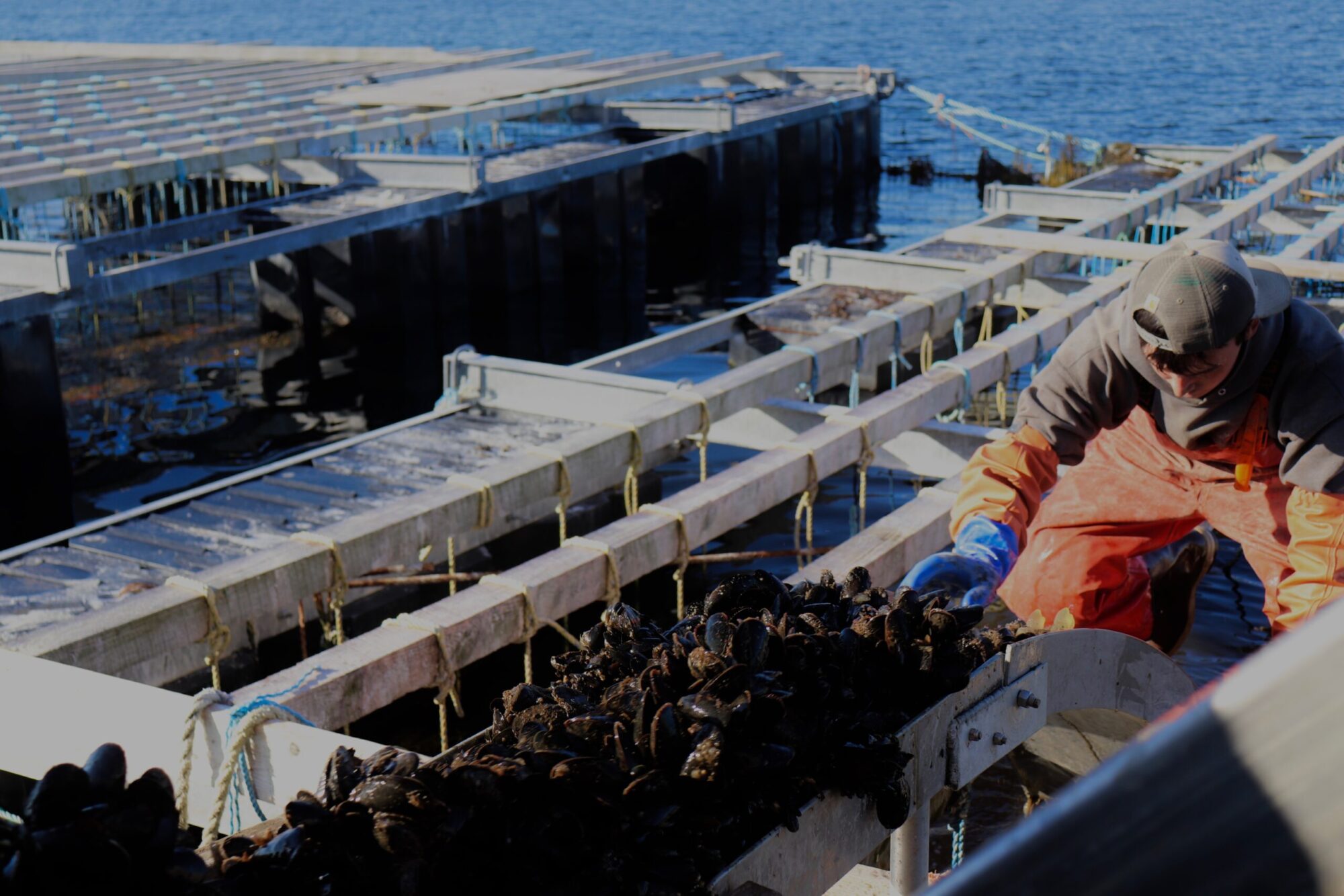
Aquaculture in Shared Waters is a community-based training program that has helped hundreds of fishermen, farmers, and professionals start or improve their aquaculture businesses since the start of the program in 2013. The original classes were for beginners, focusing on designing aquaculture farms, navigating early stages of site selection, and learning about bivalve biology with a team of instructors from the Maine Aquaculture Innovation Center (MAIC), the Maine Aquaculture Association (MAA), Maine Sea Grant, and Coastal Enterprises Inc (CEI).
More recently, Aquaculture in Shared Waters has evolved to become a whole suite of training programs and workshops that help aquaculture producers strengthen and improve their businesses. The full program continues to run through a collaborative partnership between organizations within the sector.
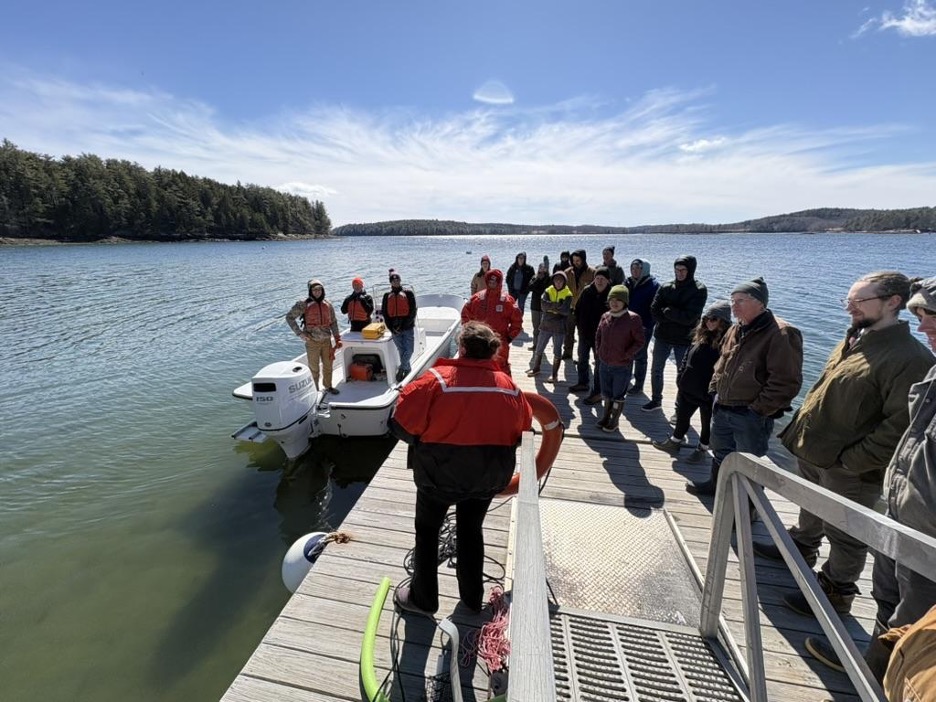
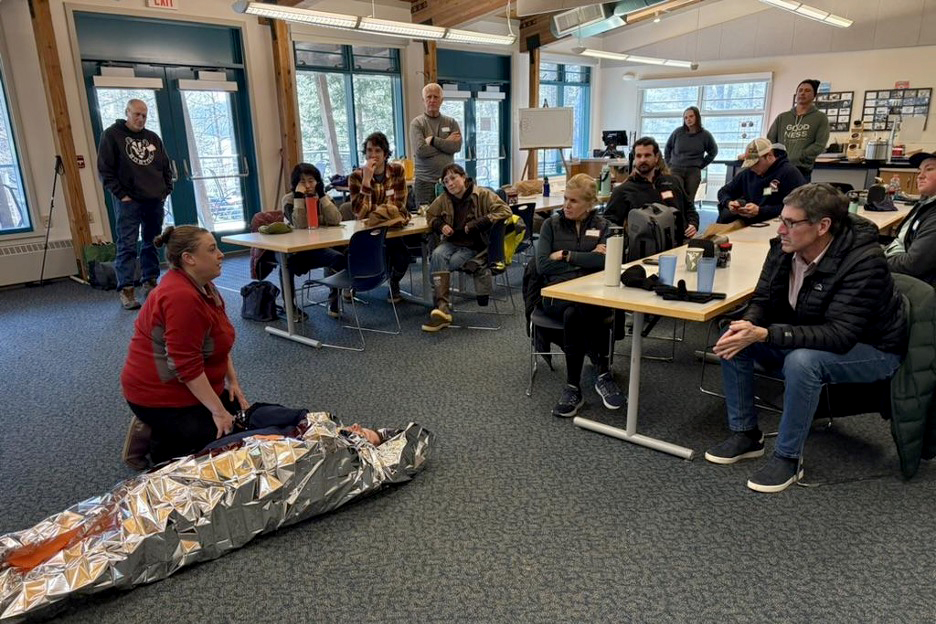
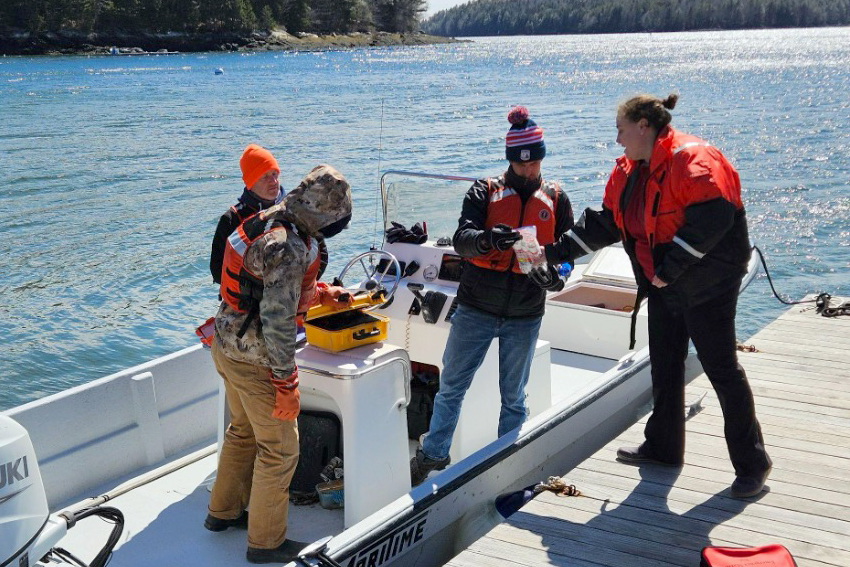
This spring (2026) the AQSW team was excited to incorporate an additional course into the AQSW program suite, In March and April, AQSW 2.0: The Business of Shellfish Farming, completed its inaugural run with 24 students.
The purpose of this new AQSW course was to support current shellfish farmers who have been operating an aquaculture business in Maine for 1 to 10 years. The course design centered around feedback from students graduating from AQSW 1.0 and those entering AQSW 2.0. It focused on farmer-identified issues related to operating and managing a shellfish farming company at an intermediate to advanced level. Maya Pelletier (MAIC) led the course along with co-directors Chris Davis (MAIC), Christian Brayden (MAA), and Dana Morse (Sea Grant). In addition to weekly readings, participants learned from leading industry, regulatory, and scientific experts on key topic areas including:
- Financial Management
- Risk Management & Insurance
- HR & Hiring
- Supply Chains & Shipping
- Safety on the Water
- Public Health Best Practices Review
- Emerging Species & Innovations in Gear,
- Energy Reduction, Solar Power, and Electrification on the Farm
The course ran for six weeks with evening classes on zoom and two field days in person. 24 individuals participated. Each week, prior to class, students submitted questions in response to the week’s reading materials. The questions, combined with mid-class questions, generated rich, detailed discussion amongst the students and content experts. The topics were timely, and students engaged with the content experts until each class’s closing seconds, leaving each day ready to put what they learned to work on the water.
The course was a resounding success, with high rates of engagement, applied learning, and completion. The AQSW team hopes to run a similar AQSW 2.0 course again in 2027. Until then, other AQSW program offerings, including stand-alone workshops on emergent industry topics, can be found on our website.
Current Aquaculture in Shared Waters programming is made possible by funding support from the Beginning Farmers and Ranchers Development Program, project award no. 2024-49400-43616, from the U.S. Department of Agriculture’s National Institute of Food and Agriculture.